Special discounts on bulk orders!

Artemia Farming Techniques
12/28/20254 min read

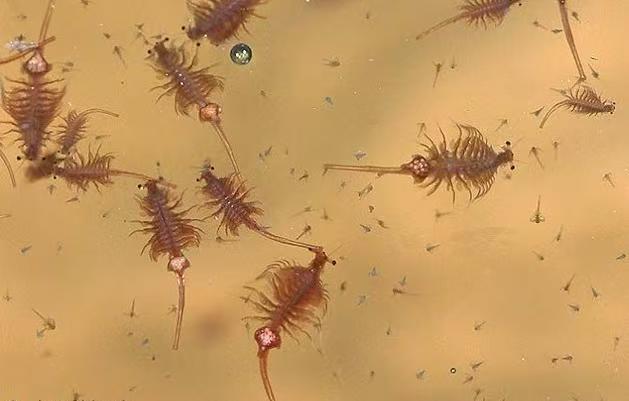
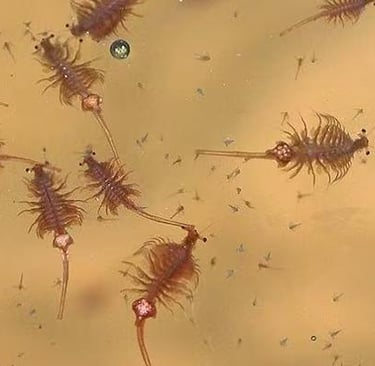
Brine shrimp, also known as Artemia or fairy shrimp, are arthropods of the genus Artemia in the family Artemiidae. They are widely found in terrestrial salt pans or salt lakes and are extensively used as high-quality live feed in aquaculture, as they are rich in protein and fatty acids. Therefore, they serve as excellent feed for fish and shrimp larvae. Let us now take a look at the cultivation techniques for brine shrimp.
Cultivation Equipment: Brine shrimp cultivation requires almost no equipment, as they can survive in environments with very low oxygen levels, and aeration is generally unnecessary. During the hot summer season, dissolved oxygen levels in the water may be low, and if the stocking density is high, leftover feed may sometimes deteriorate, causing severe oxygen deficiency in the water. In such cases, an air pump can be used to supplement oxygen. However, since brine shrimp have weak swimming abilities, the airflow should not be too strong, as they would just float along with the current, unable to feed themselves. They can tolerate a wide range of temperatures and can survive even in sub-zero saline water. They also can handle summer temperatures up to 40°C without significant mortality (although mild hypoxia at high temperatures may cause minimal deaths). To reduce costs, heating is generally unnecessary. Additionally, brine shrimp can withstand high ammonia and heavy pollution, so filtration equipment is not needed for home cultivation.
Hatching Method: Brine shrimp eggs are usually stored under refrigeration and should be exposed to room temperature for about a week before hatching, otherwise, the hatching rate will be low. For small-scale hatching, a small container with a narrower top and wider base can be used as an incubator, filled with brackish water. The water used for hatching is the opposite of the water used for cultivation; it should be very dilute seawater, roughly half seawater and half freshwater, ensuring a hatching rate above 95%. Before use, the water should be boiled and disinfected to prevent contamination by microorganisms. Install an air inlet at the bottom of the container to allow small bubbles to rise gently, but do not over-aerate. Maintaining the water temperature between 20–30°C results in better hatching rates, although lower temperatures will not severely affect hatching. For brine shrimp eggs from different sources, the first-stage nauplii will hatch at different times, approximately between *** and *** hours. At this time, aeration should be stopped, and the water allowed to settle for 10–20 minutes, letting it stratify. The nauplii will swim in the middle layer, empty eggshells will float on the surface, and unhatched or dead eggs will sink to the bottom. Use a pipette to draw water from the middle layer containing the nauplii and transfer it directly into the cultivation tank. Additionally, fresh brackish water can be added to the incubator, with continued gentle aeration for another one or two days, allowing more nauplii to hatch.
Brine shrimp, also known as Artemia or fairy shrimp, are arthropods of the genus Artemia in the family Artemiidae. They are widely found in terrestrial salt pans or salt lakes and are extensively used as high-quality live feed in aquaculture, as they are rich in protein and fatty acids. Therefore, they serve as excellent feed for fish and shrimp larvae. Let us now take a look at the cultivation techniques for brine shrimp.
Cultivation Equipment: Brine shrimp cultivation requires almost no equipment, as they can survive in environments with very low oxygen levels, and aeration is generally unnecessary. During the hot summer season, dissolved oxygen levels in the water may be low, and if the stocking density is high, leftover feed may sometimes deteriorate, causing severe oxygen deficiency in the water. In such cases, an air pump can be used to supplement oxygen. However, since brine shrimp have weak swimming abilities, the airflow should not be too strong, as they would just float along with the current, unable to feed themselves. They can tolerate a wide range of temperatures and can survive even in sub-zero saline water. They also can handle summer temperatures up to 40°C without significant mortality (although mild hypoxia at high temperatures may cause minimal deaths). To reduce costs, heating is generally unnecessary. Additionally, brine shrimp can withstand high ammonia and heavy pollution, so filtration equipment is not needed for home cultivation.
Hatching Method: Brine shrimp eggs are usually stored under refrigeration and should be exposed to room temperature for about a week before hatching, otherwise, the hatching rate will be low. For small-scale hatching, a small container with a narrower top and wider base can be used as an incubator, filled with brackish water. The water used for hatching is the opposite of the water used for cultivation; it should be very dilute seawater, roughly half seawater and half freshwater, ensuring a hatching rate above 95%. Before use, the water should be boiled and disinfected to prevent contamination by microorganisms. Install an air inlet at the bottom of the container to allow small bubbles to rise gently, but do not over-aerate. Maintaining the water temperature between 20–30°C results in better hatching rates, although lower temperatures will not severely affect hatching. For brine shrimp eggs from different sources, the first-stage nauplii will hatch at different times, approximately between *** and *** hours. At this time, aeration should be stopped, and the water allowed to settle for 10–20 minutes, letting it stratify. The nauplii will swim in the middle layer, empty eggshells will float on the surface, and unhatched or dead eggs will sink to the bottom. Use a pipette to draw water from the middle layer containing the nauplii and transfer it directly into the cultivation tank. Additionally, fresh brackish water can be added to the incubator, with continued gentle aeration for another one or two days, allowing more nauplii to hatch. ... ...
Brand
Explore our sleek website template for seamless navigation.
Contact
Newsletter
+852-5201-3858
© 2024. All rights reserved.